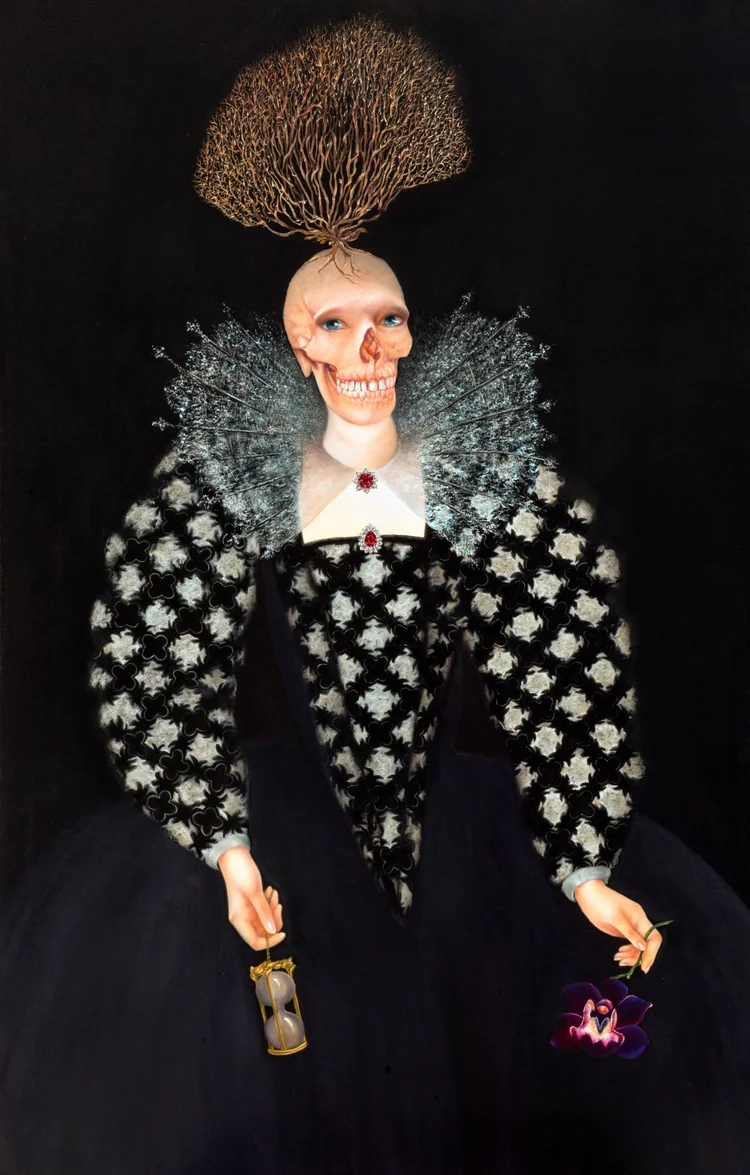
Crowned by Time
160x95cm, oil on canvas
An existential contemplation that seeks to embody concepts such as time, vanity, and the eternal cycle of life and death. At the head, a skull—symbol of vanity, decay, but also of timeless existence. Two luminous, light-colored eyes, in contrast to the mortal shell that encloses them, stare directly at the viewer. It is as if they pierce the darkness, carrying the knowledge of time, the truth of existence. Atop the skull, an eerie crown—a creation reminiscent of the iconic aesthetic of Alexander McQueen. The grains of time flow ceaselessly, revealing that nothing can be eternal. The black orchid, on the other hand, the flower of mystery, love, and death, hovers in her hands, offered either as a gift or as a curse.The composition teeters between regal elegance and mortality, power and impermanence, darkness and the flickering glow of a secret, inner flame. A figure that serves as a reminder that, no matter how time passes, some gazes remain immortal.
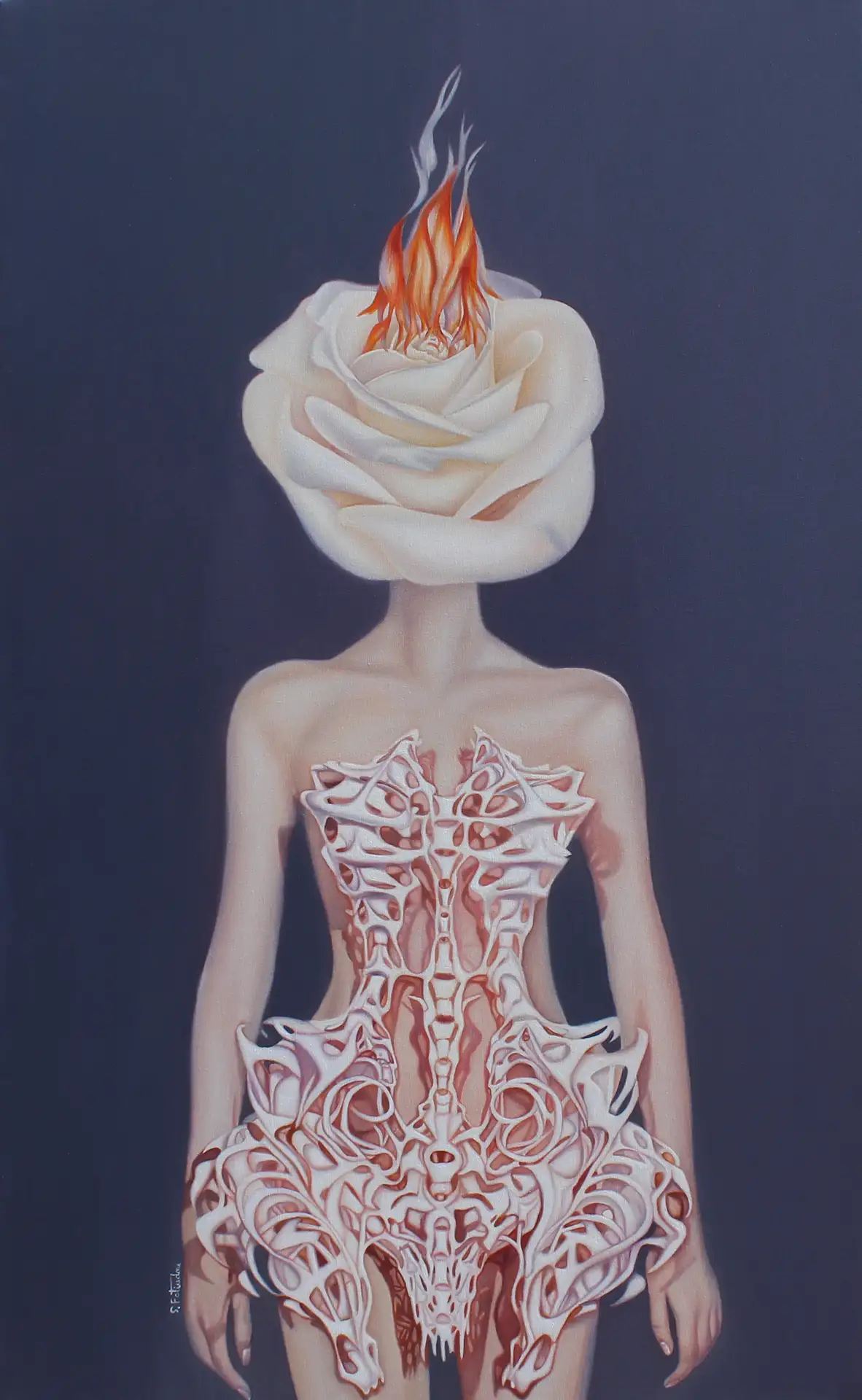
Flamma Rosa (The Rose of Flame)
130x80cm, oil on canvas
A female figure, adorned in a surreal garment—a reflection of her very existence. The garment reveals the image of a human skeleton, as if to remind us that beneath every beauty and every surface, our essence remains the same—a delicate interplay between life and death.Upon her head blooms an off-white rose. The rose, a symbol of beauty, purity, but also transience, seems to represent her soul. From the edges of its petals, flames emerge—not destructive, but rather rising from an internal core of energy. Fire, a primordial element of creation and rebirth, both nourishes and threatens the bloom. It is the eternal struggle between matter and spirit, decay and the force of existence.The purple-blue hues form a universe between dream and reality, enveloping the figure, as if holding her in a dimension beyond time.This piece speaks to the fragile nature of life and the eternal flame that burns within us. It is the reflection of the finite body and the undying soul, of earthly existence and intangible spirit.
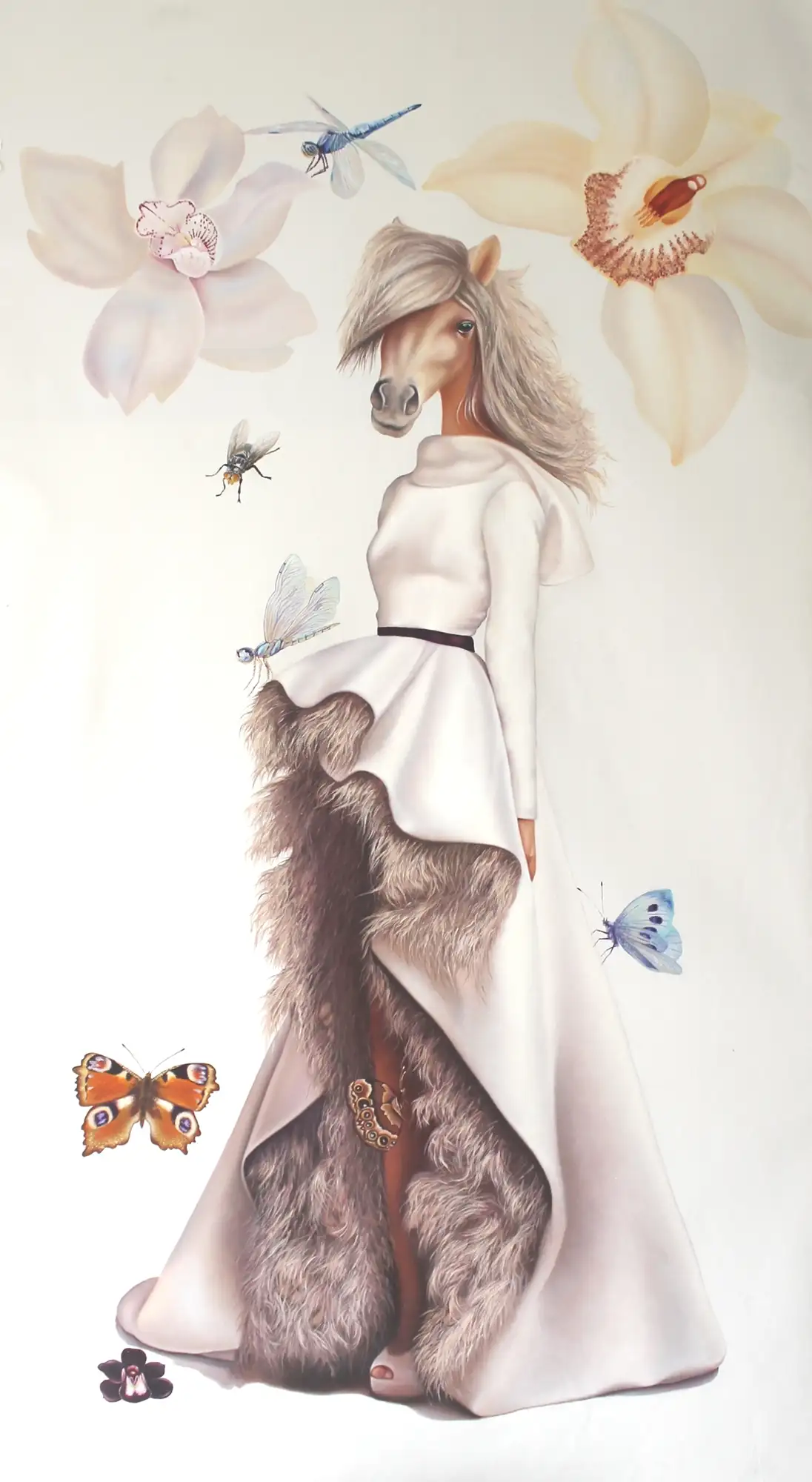
Silken Wild Chimera
180x95cm, oil on canvas
The female figure stands upright and resolute. An opening at the lower part of the garment reveals a flowing mane, as if it were part of a horse galloping invisibly through her body. Her head has been entirely replaced by the head of a horse. This transformation is intended to symbolize freedom, instinct, and the power that lies beneath the human exterior. Around her, nature pulses with life. Flowers unfold their petals as if participating in a ritual. Butterflies and dragonflies drift gently through the air; yet among them appears a fly. A foreign presence within this poetic setting, a small but essential suggestion that life is not only beauty, but also decay—a continuous interaction between the ephemeral and the eternal. The scene hovers between reality and dream. The work seeks to speak of instinct, of nature that embraces and transforms, and of the delicate line between the familiar and the enigmatic.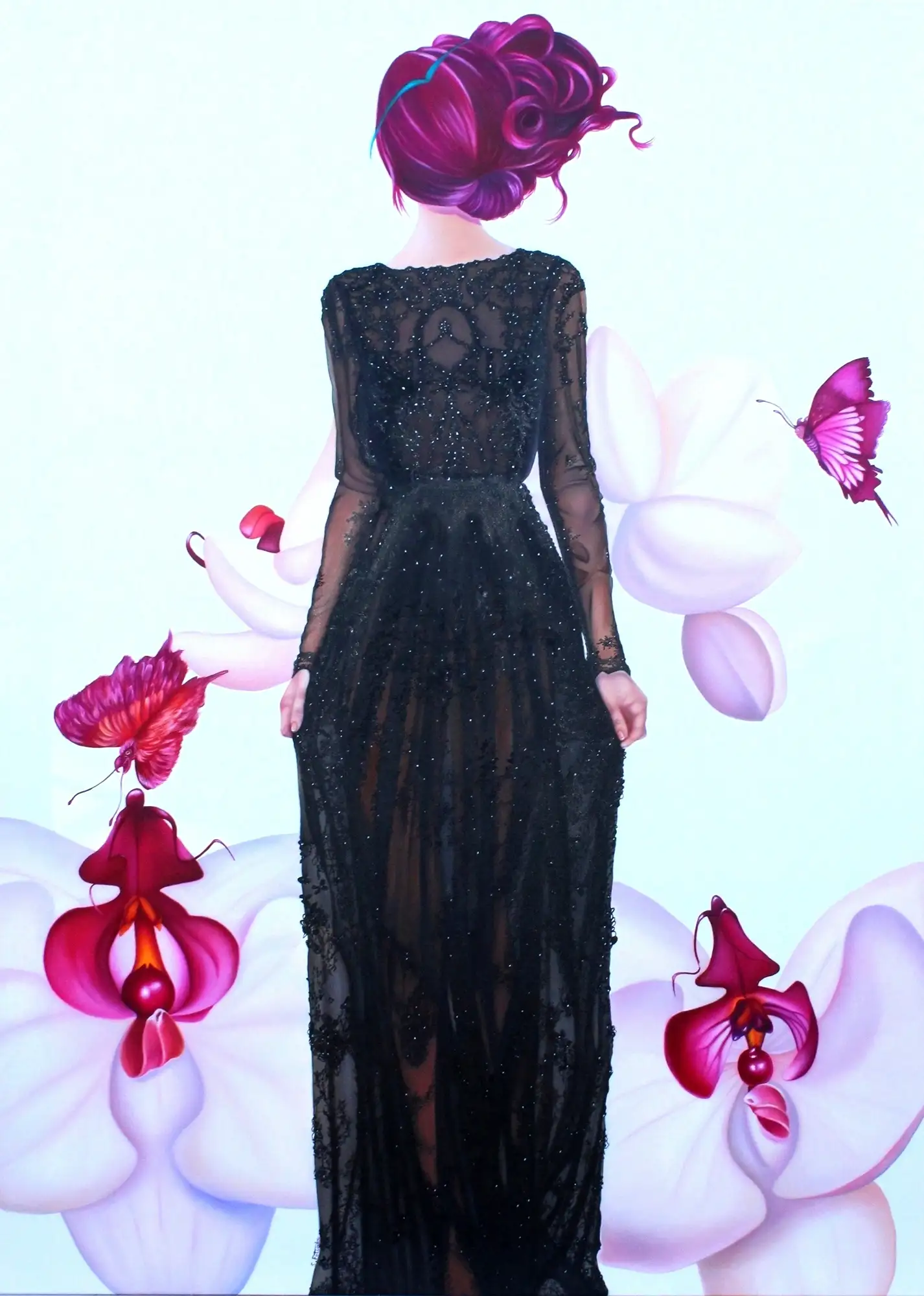
Lace and Enigma
195x140cm, oil on canvas
The female figure radiates elegance, yet the inversion of her head in relation to her body creates a paradoxical feeling, as if the natural flow of reality is being undone. The small foliage adorning her hair resembles a bird ready to take flight, symbolizing the freedom of thought, the escape from the expected—a balance between stillness and movement, confinement and liberation. The large orchids, with tongues extending from their centers, evoke a sense of vitality and passion, playing with the contrast between desire and purity, life and decay. The "butterflies" with bodies of strange creatures connect to transformation but also to the unknown, hinting at a darker undertone, suggesting a link between beauty and the subconscious or the uncanny. Their presence, alongside the orchids, creates a space of interaction where forms seem to converse, simultaneously revealing and concealing. It is a discourse on femininity, mortality, eroticism, and a sense of unease with contemporary.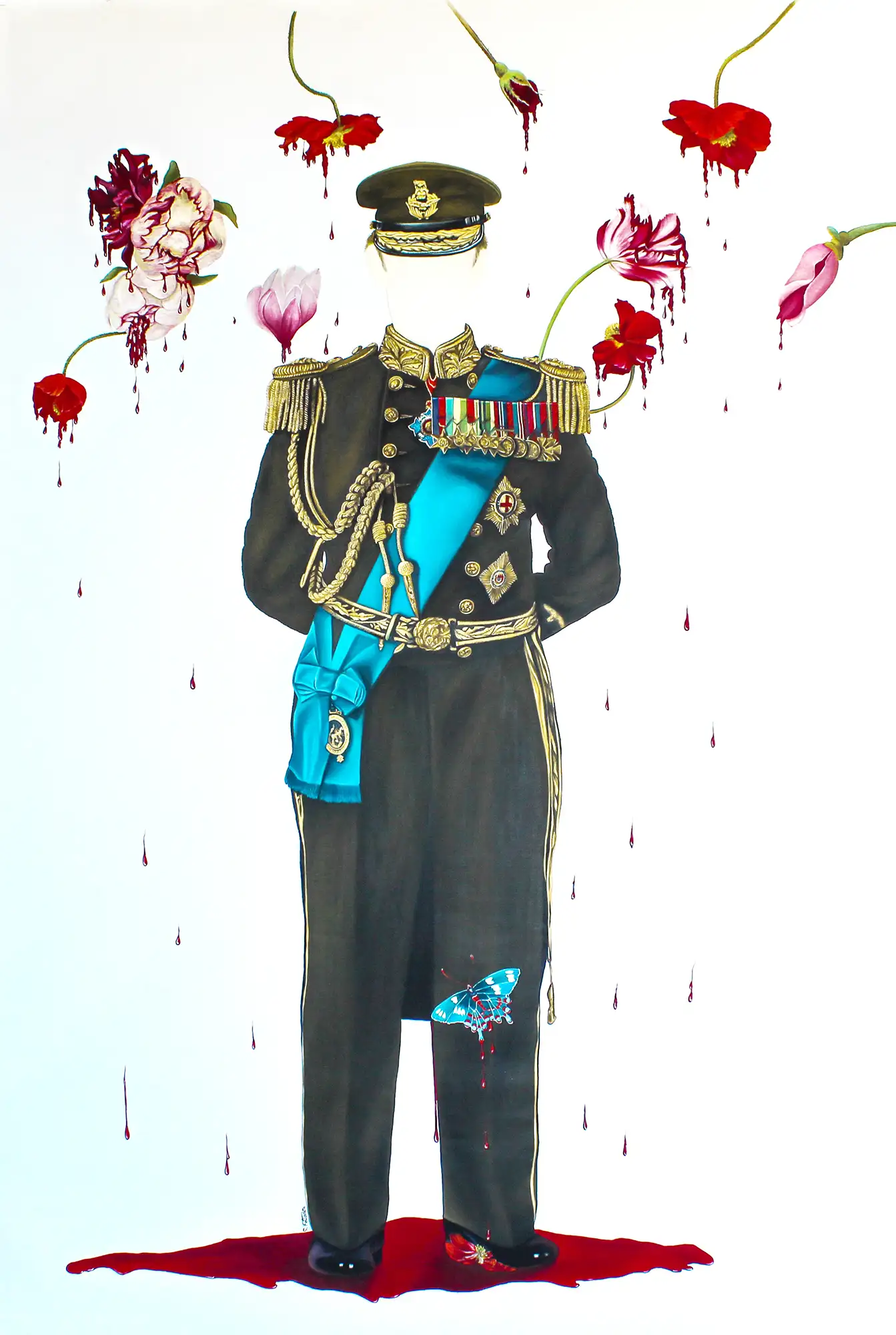
Bleeding Flowers
200x140cm, oil on canvas
The work addresses power as a regime of representation and discipline. The figure is stripped of its face, shifting attention away from individual identity toward the institutions that produce and regulate it. The body functions as a carrier of institutional violence and historical continuity. The uniform does not signify an individual, but a mechanism. Flowers, as symbols of beauty and life, coexist with bleeding, undermining their romanticized reading and exposing the violence that is often concealed behind rituals of honor, order, and normality. The work does not narrate an event; rather, it activates a field of reflection on legitimized violence and the silence that accompanies it. The viewer is invited to consider their own position within this symbolic economy, where the beautiful and the traumatic coexist inseparably.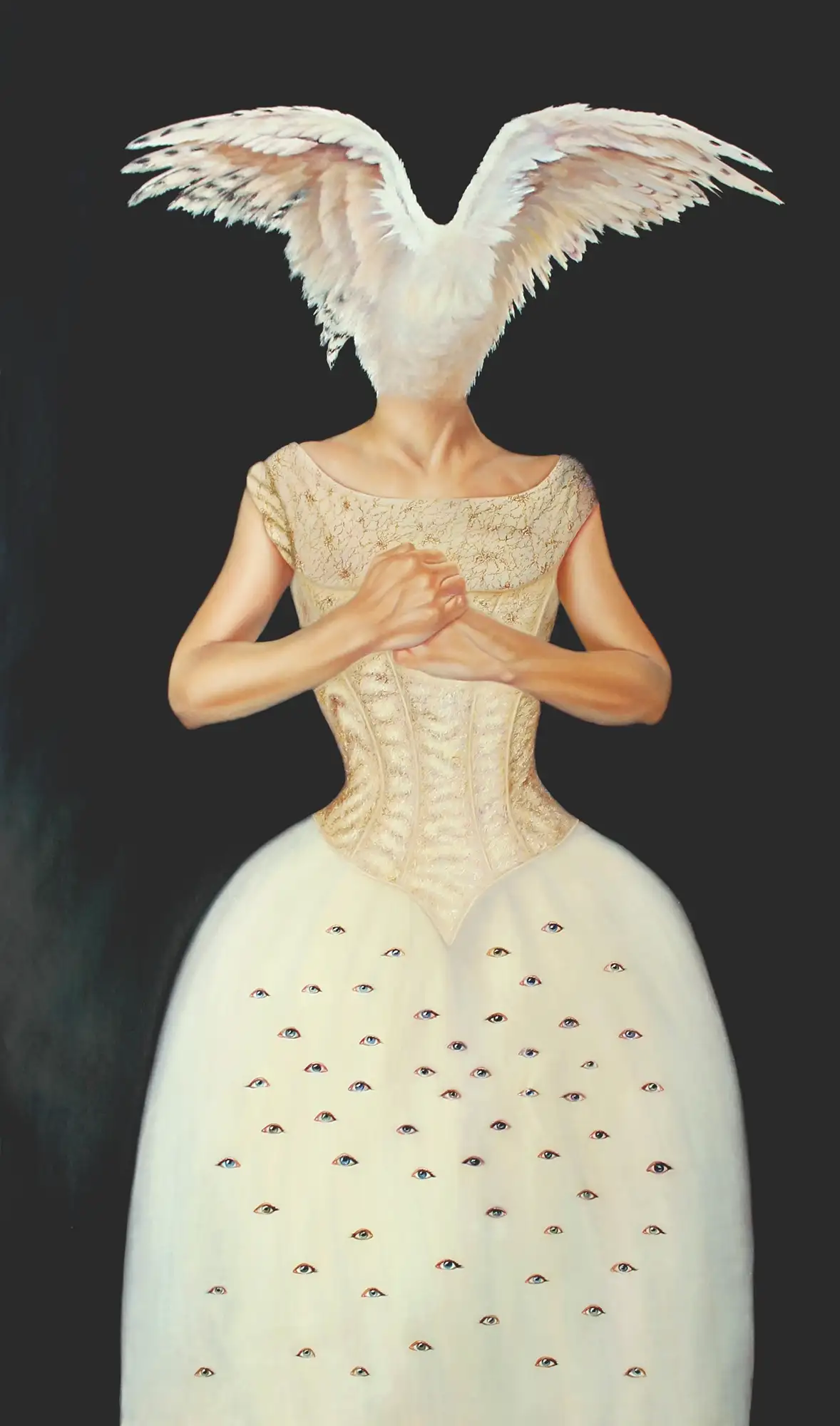
The Politics of the Gaze
160x95cm, oil on canvas
The work explores the gaze as a structure of power and a mechanism through which the gendered body is constituted. The figure does not function as a bearer of identity, but as a site where multiple positions of viewing are inscribed and reproduced. The absence of the face destabilizes conventional recognizability and shifts attention from the subject to the process of vision itself. The body is not proposed as a passive object, but as a field in which the gaze is activated, dispersed, and returned. The wings do not represent flight; rather, they suggest it as a possibility and as a state of tension. Flowers, as symbols of beauty and life, coexist with bleeding, undermining their romanticized reading and exposing the violence that is often concealed behind rituals of honor, order, and normality. The work does not narrate an event; rather, it activates a field of reflection on legitimized violence and the silence that accompanies it. The viewer is invited to consider their own position within this symbolic economy, where the beautiful and the traumatic coexist inseparably.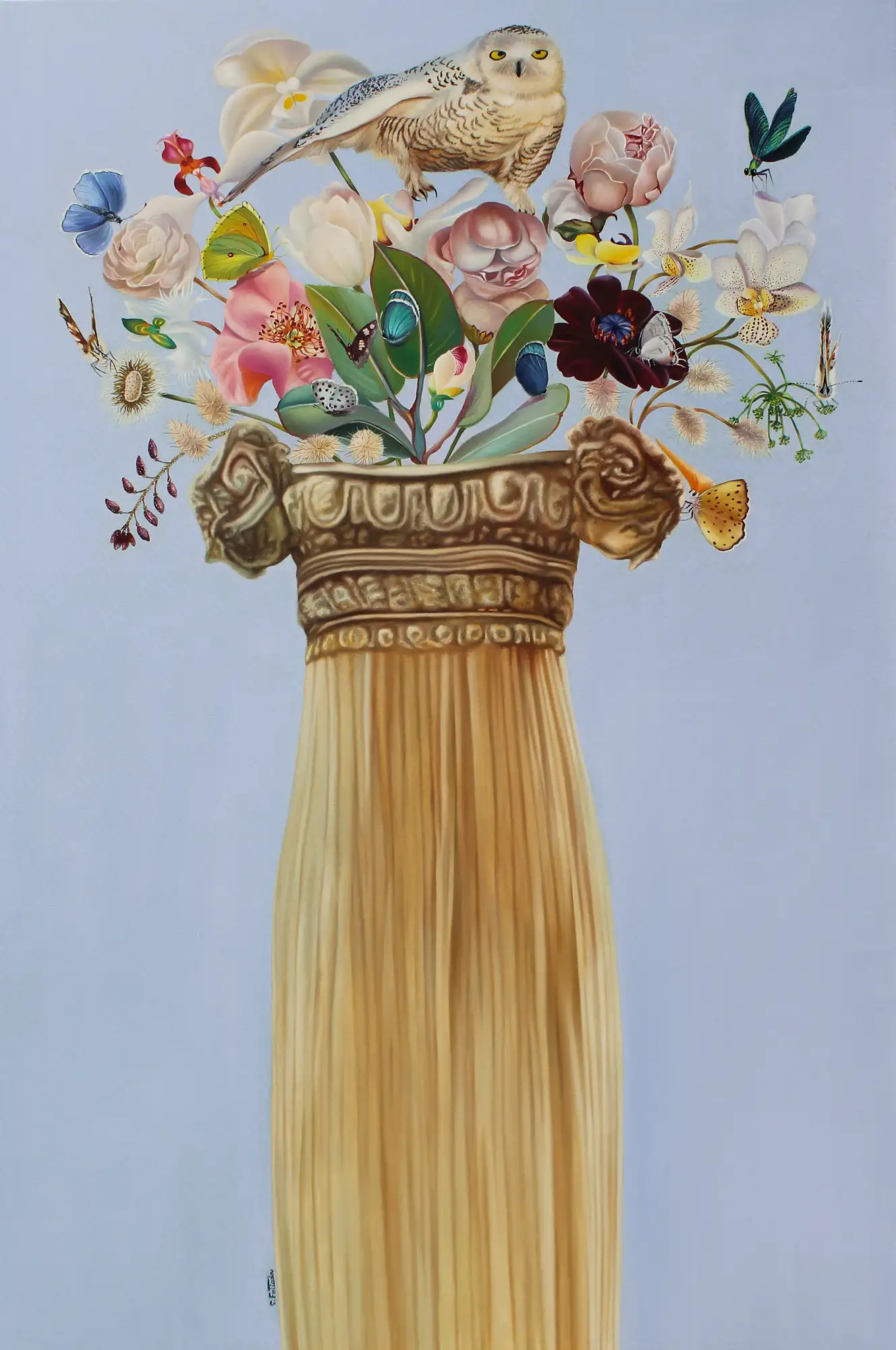
Athena’s Garden
180x120cm, oil on canvas
“Athena’s Garden”, drawing on symbolism from Ancient Greece and the figure of the goddess Athena, seeks to speak about wisdom, strength, and beauty. The column-dress embodies the elegance and timelessness of ancient Greek aesthetics, while its upper section—crowned with a garden and an owl—introduces a dreamlike dimension, emphasizing the relationship between the stability of the column and the vitality of nature in bloom. The owl, a symbol of Athena, the goddess of wisdom, was regarded in Ancient Greece as a sacred bird, representing sharp intellect and insight. The Ionic columns, with their refined curves, evoke the harmonious union of reason and aesthetic balance—qualities closely associated with Athens and its cultural legacy. The garden at the top of the column-dress is intended to express the fertility of knowledge and the creativity that flourishes when grounded in wisdom. (The dress featured in the work is a creation by Gianfranco Ferré, inspired by Ionic-style columns.)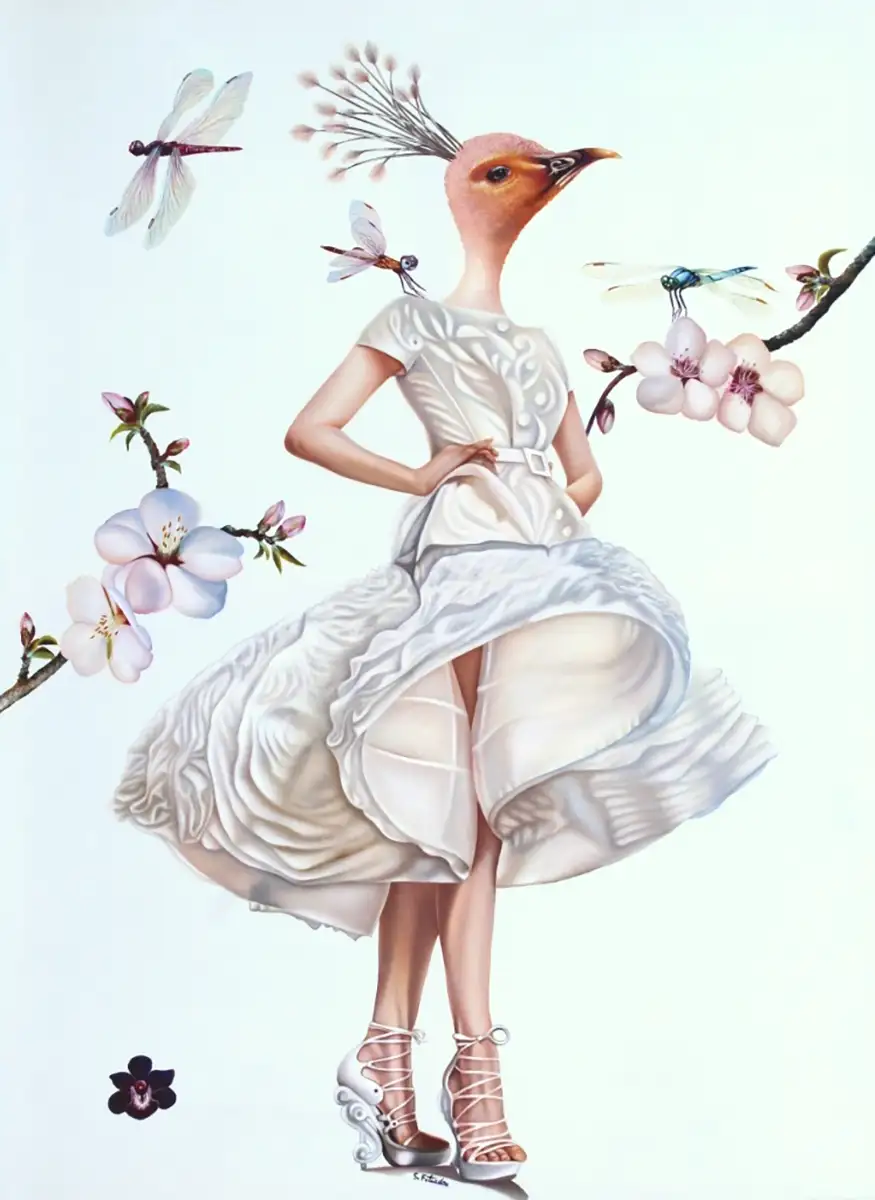
Celestian Elegance
160x110cm, oil on canvas
A female figure dressed in a white Dior gown, resembling a sculptural form of silk flowing around her body. Its delicate wings rise to form a crown of natural grandeur, while her gaze remains enigmatic, charged with suggestion and promise. Surrounding her, almond blossoms unfold like a veil of regeneration and fragile beauty. They appear to hover, generating a sense of transience, as if the figure inhabits a dreamlike, timeless realm. The image approaches the threshold of the imaginary, where fashion, nature, and symbolism converge into a unified visual language. It reflects inner strength, delicacy, and enduring beauty, bringing together the human and the mythical, the ephemeral and the eternal.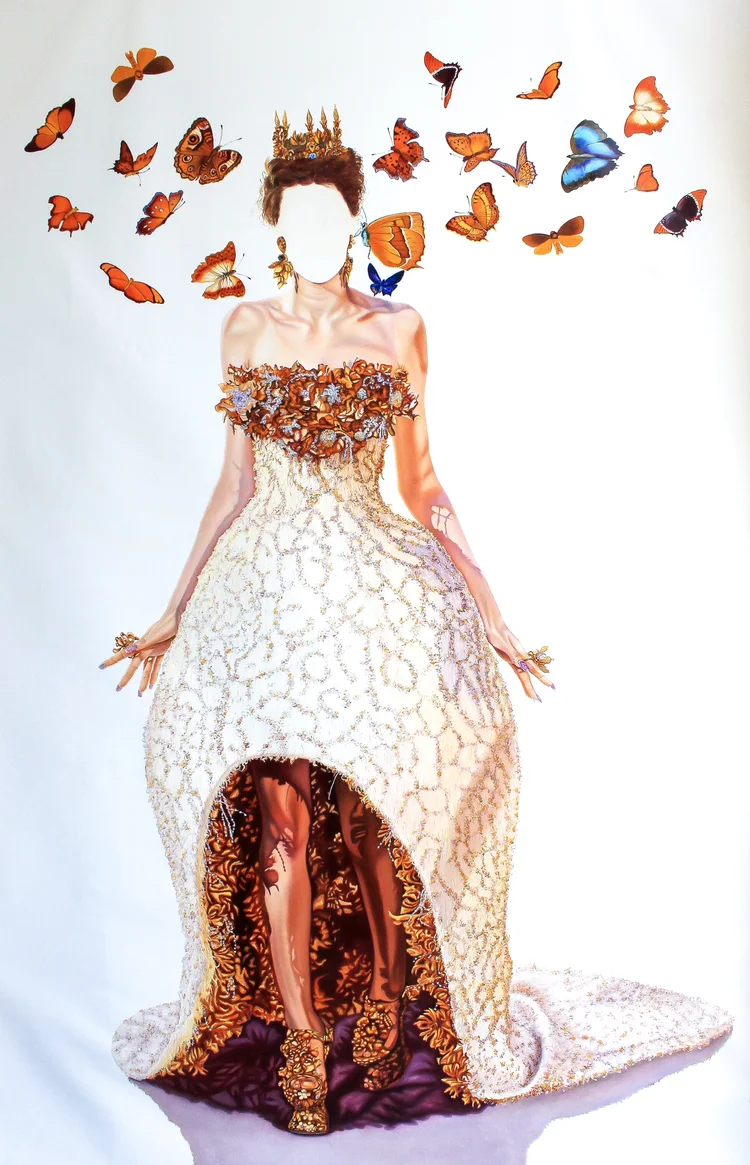
The Staff of Beauty
195x140cm, oil on canvas
The work unfolds through an interplay between external radiance and internal doubt. It presents a figure that elicits admiration and perhaps envy, as it embodies an ideal of beauty and commanding presence. The figure possesses no fixed or specific identity; it functions instead as a projection, a reflection of the viewer, who is invited to imagine themselves in its place. This dynamic generates a play between self-image and identification. The absence of facial features, however, evokes the sense of a mask—a performative role the figure may have assumed, one that conceals rather than reveals its inner world. Purple operates symbolically, suggesting a mystical dimension alongside an undercurrent of melancholy. The figure may not be as content as it appears; beneath the surface of beauty and grandeur lies the possibility of an ongoing inner search or an unfulfilled desire. The butterflies, as symbols of liberation, may signify the figure’s desire to detach from its own image and become something other than what it appears to be. Alternatively, they may indicate that the figure is already in a process of transformation. Ultimately, the work seeks to address the tension between appearance and being—the distance between a luminous exterior image and an inner truth.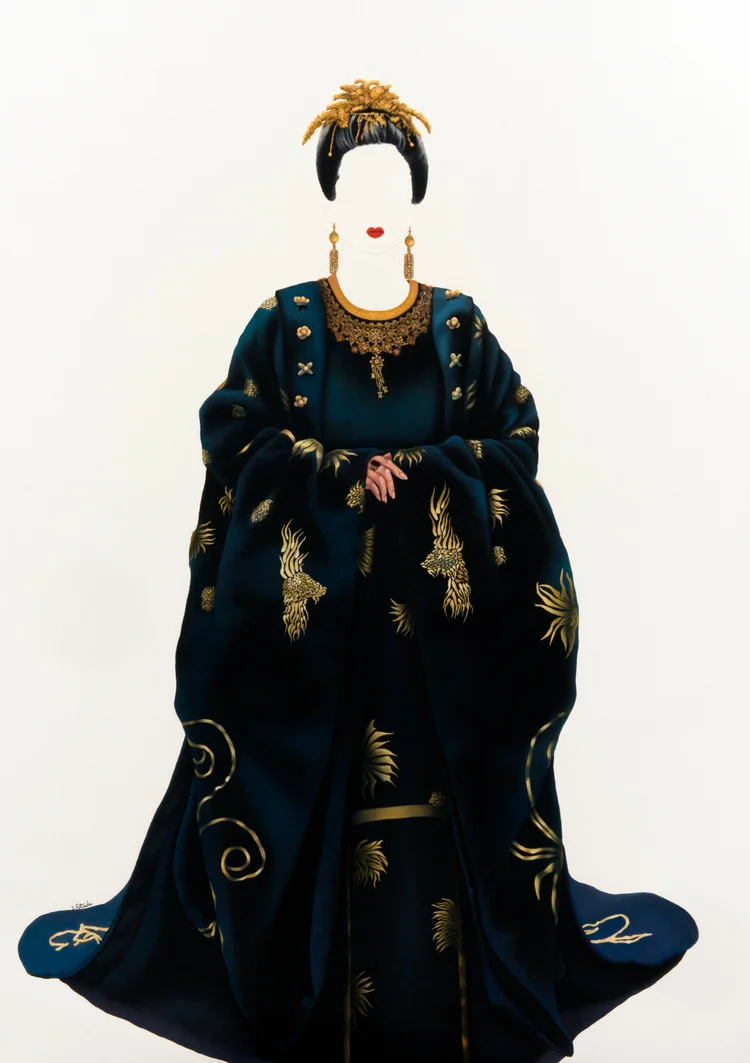
Between West and East
200x140cm, oil on canvas
The work “Between West and East” explores the timeless union of two worlds that ultimately coexist. Through form, garment, and decorative detail, a silent dialogue emerges between Eastern spirituality and Western structure. The patterns, colors, and tactile quality of the fabric evoke ritual, memory, and tradition, while the composition, the necklace at the neck, and the clarity of form introduce elements of a contemporary Western perspective. The body is absent, yet its presence is strongly felt — as a carrier of culture, history, and identity. The work does not seek to define boundaries, but to dissolve them. It proposes an in-between space where Eastern and Western elements do not oppose one another, but are interwoven into a new, unified narrative. A space in which cultural identity is not static, but constantly evolving.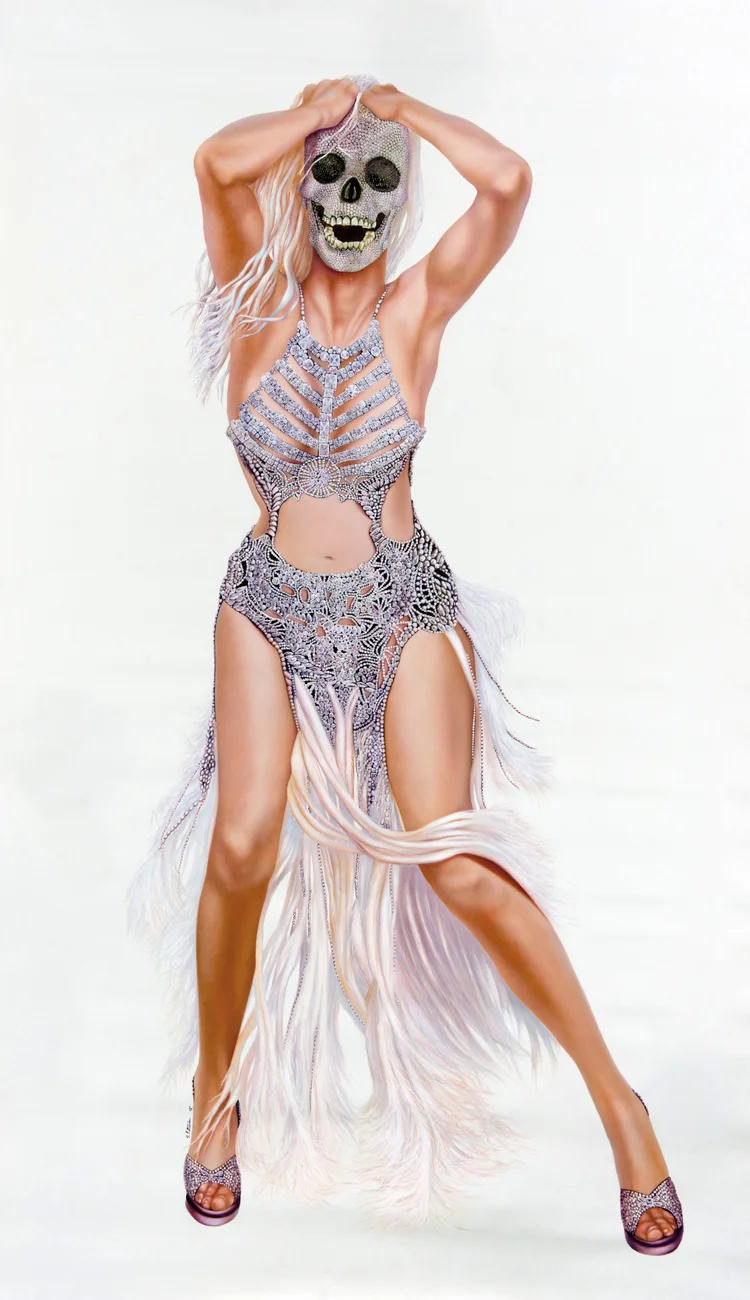
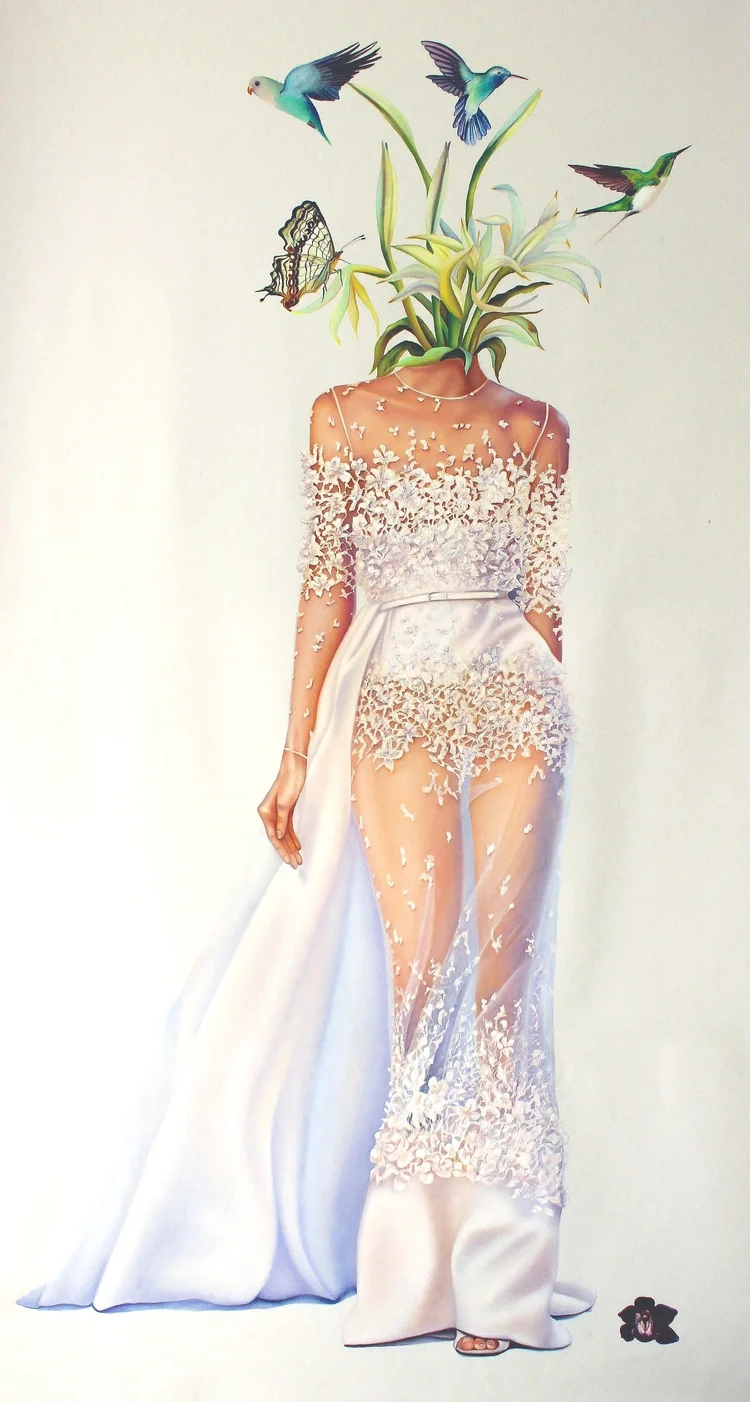
Dancing with the Infinity
250x135cm, oil on canvas
Bloom
180x100cm, oil on canvas
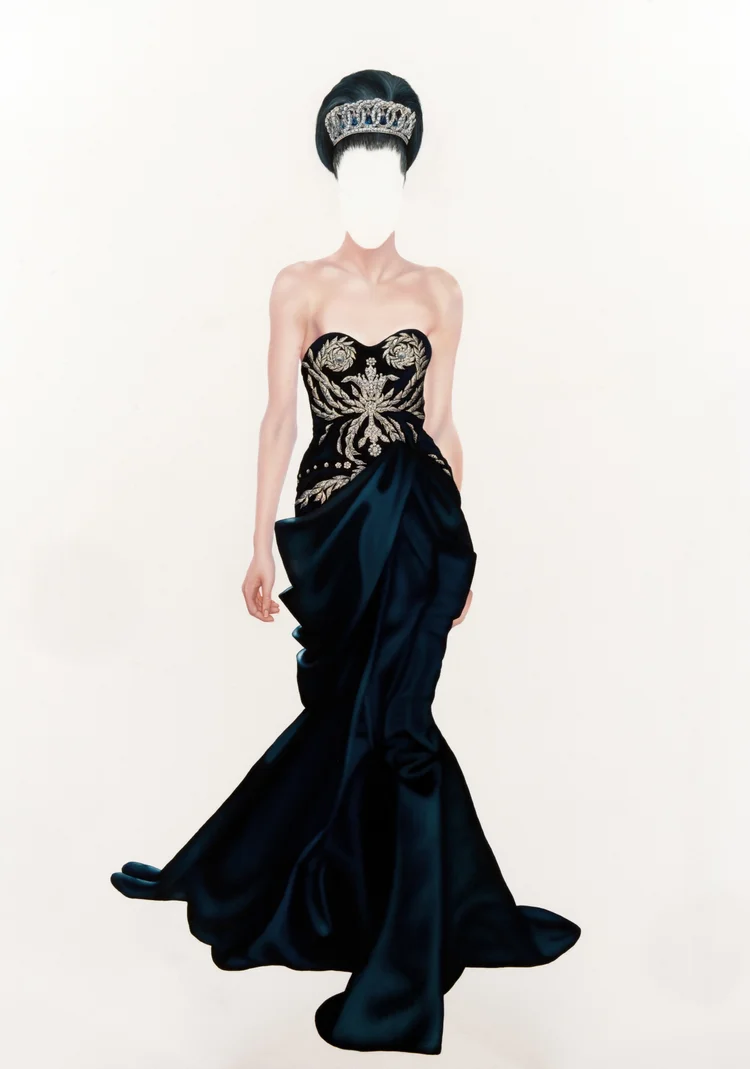
In Blue
180x100cm, oil on canvas
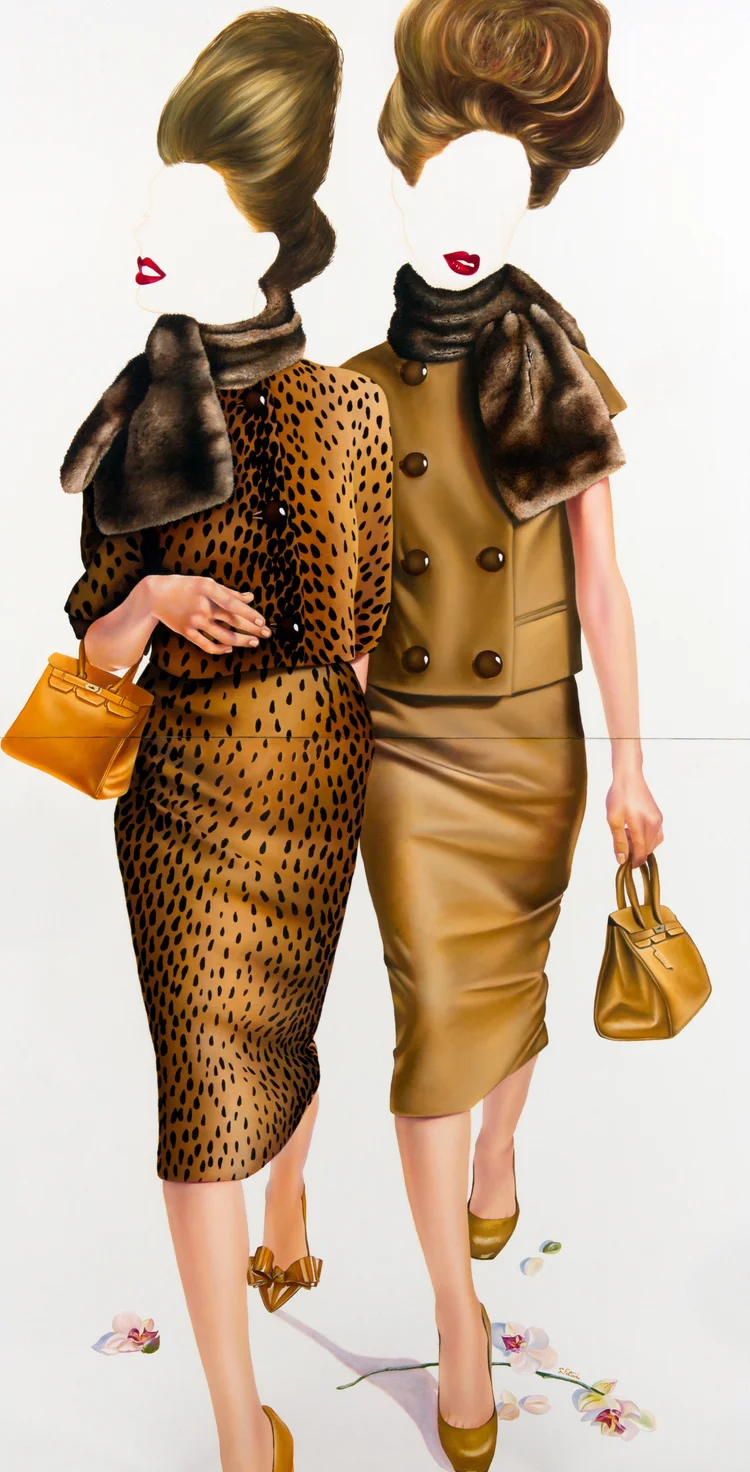
Friends
200x100cm, oil on canvas
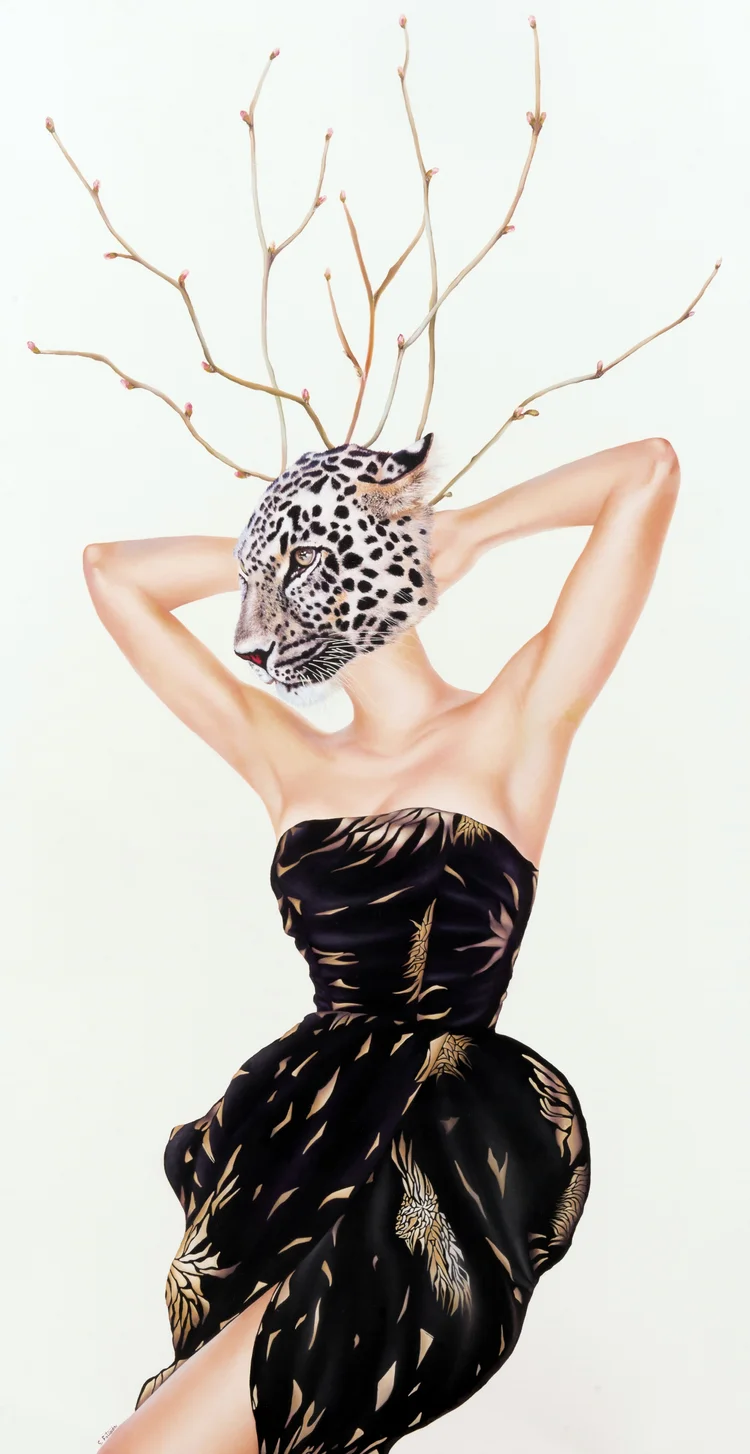
Savage Elegance
130x95cm, oil on canvas
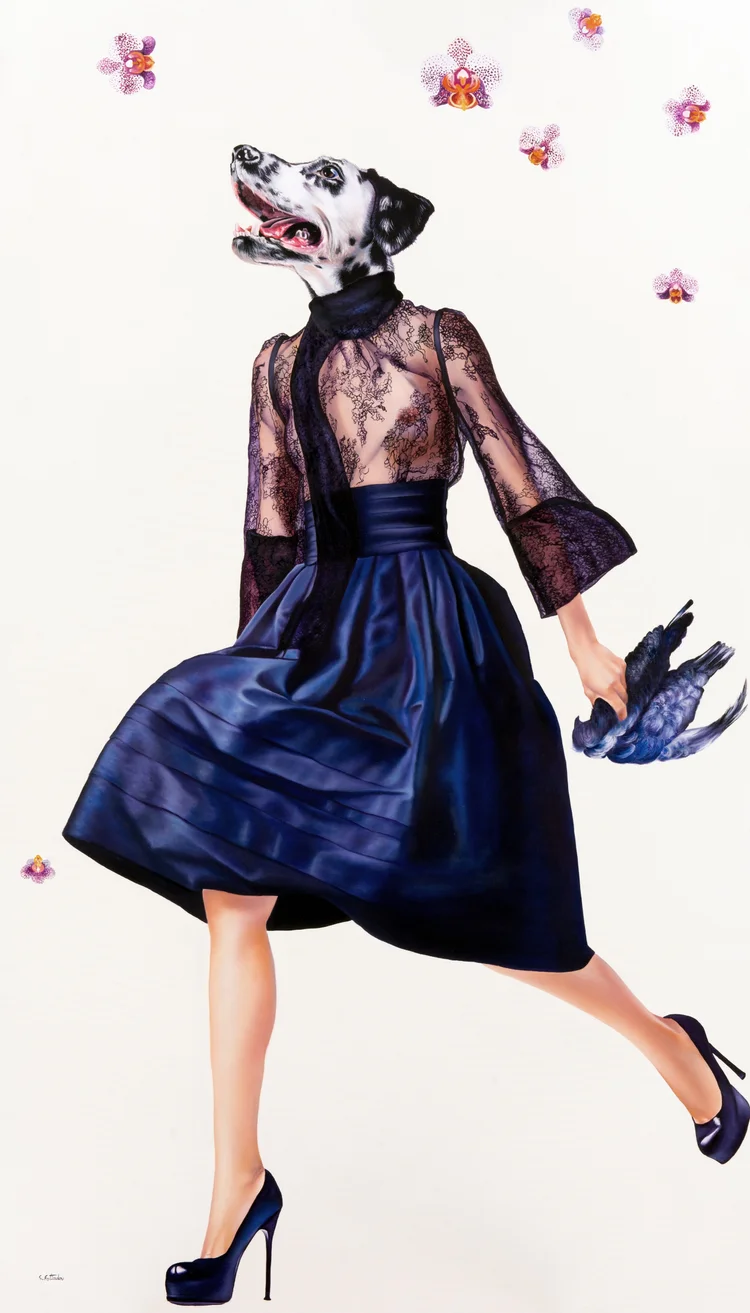
The Animal Inside
180x105cm, oil on canvas
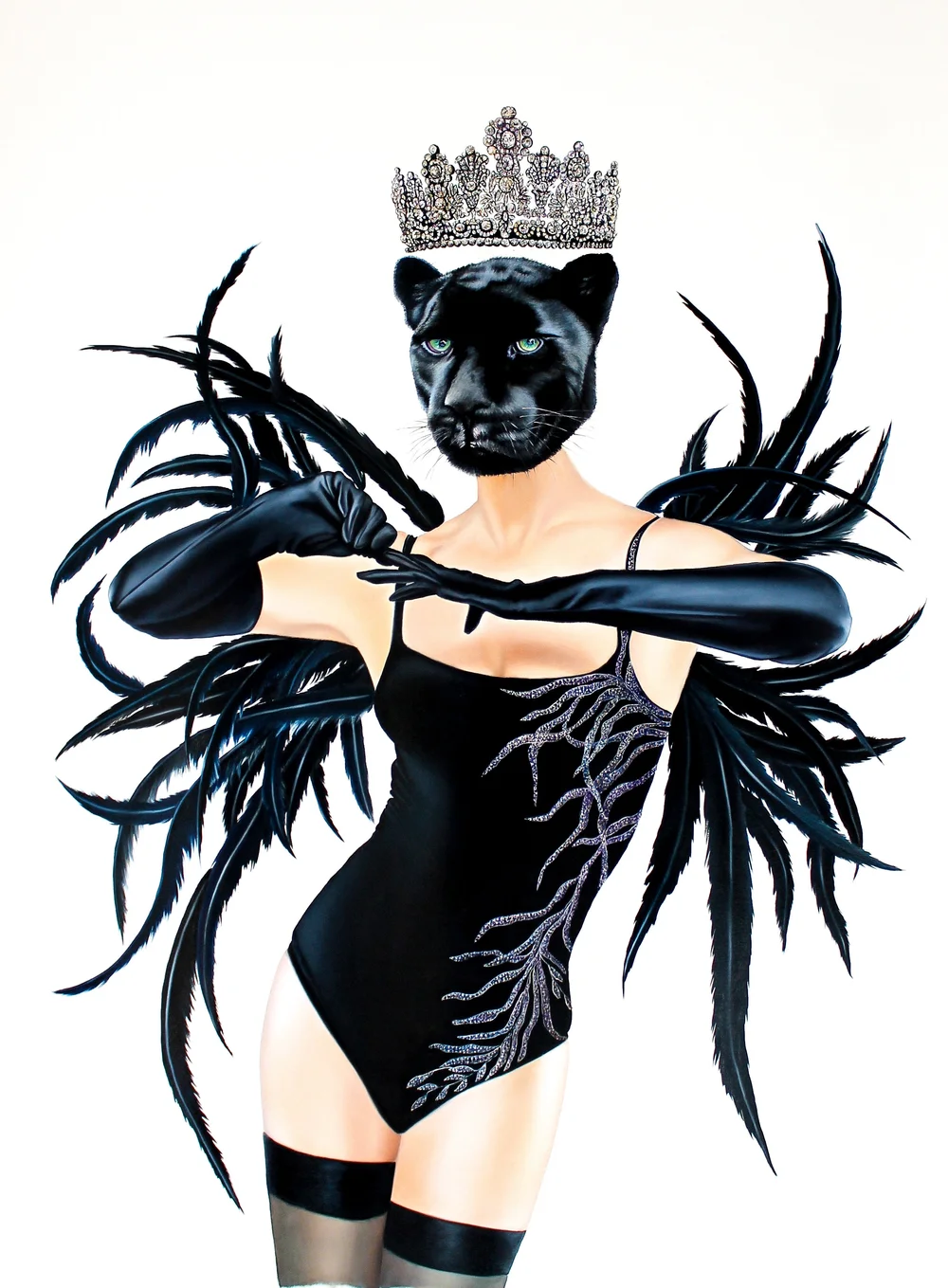
Tamed Beast
130x95cm, oil on canvas
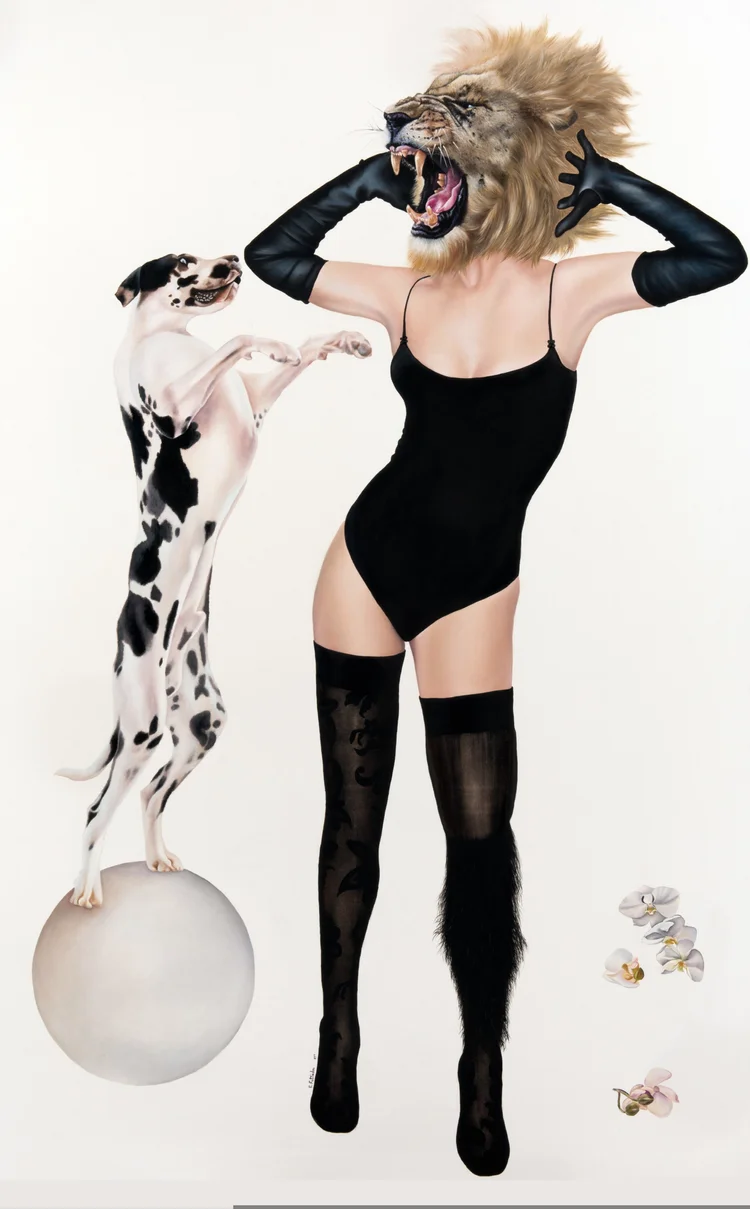
Dominion of Masks
210x135cm, oil on canvas
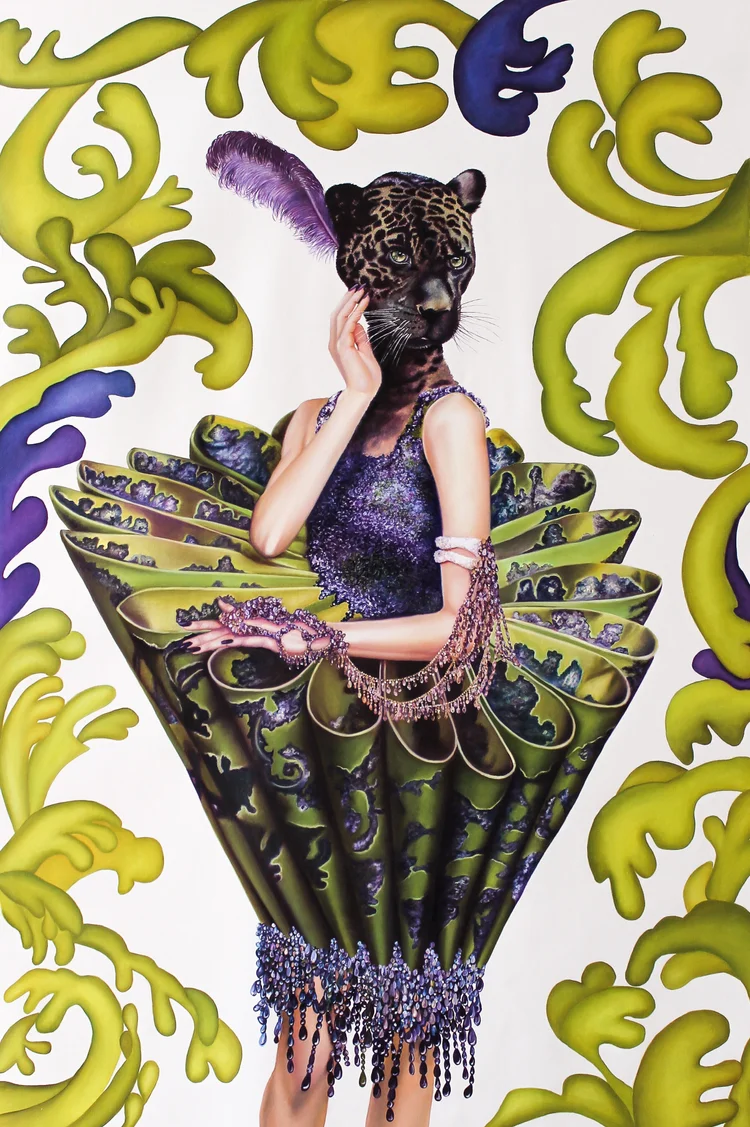
Primal Grace
140x100cm, oil on canvas
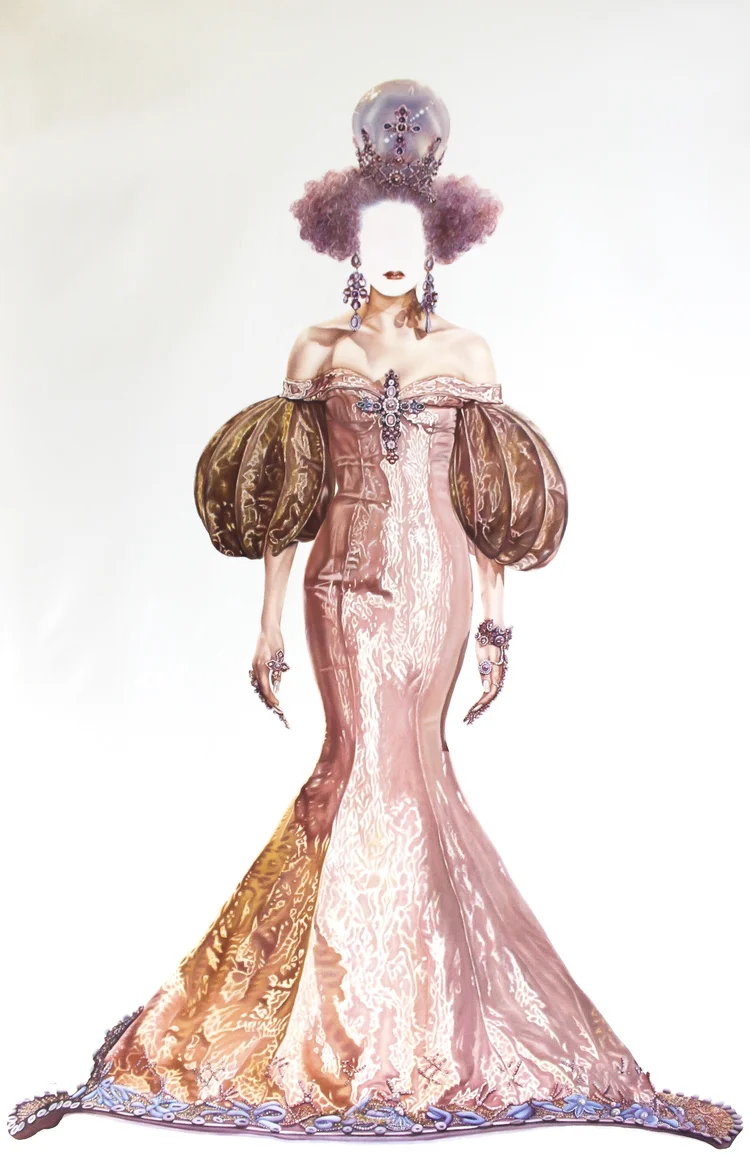
Instinct in Silk II
240x160cm, oil on canvas
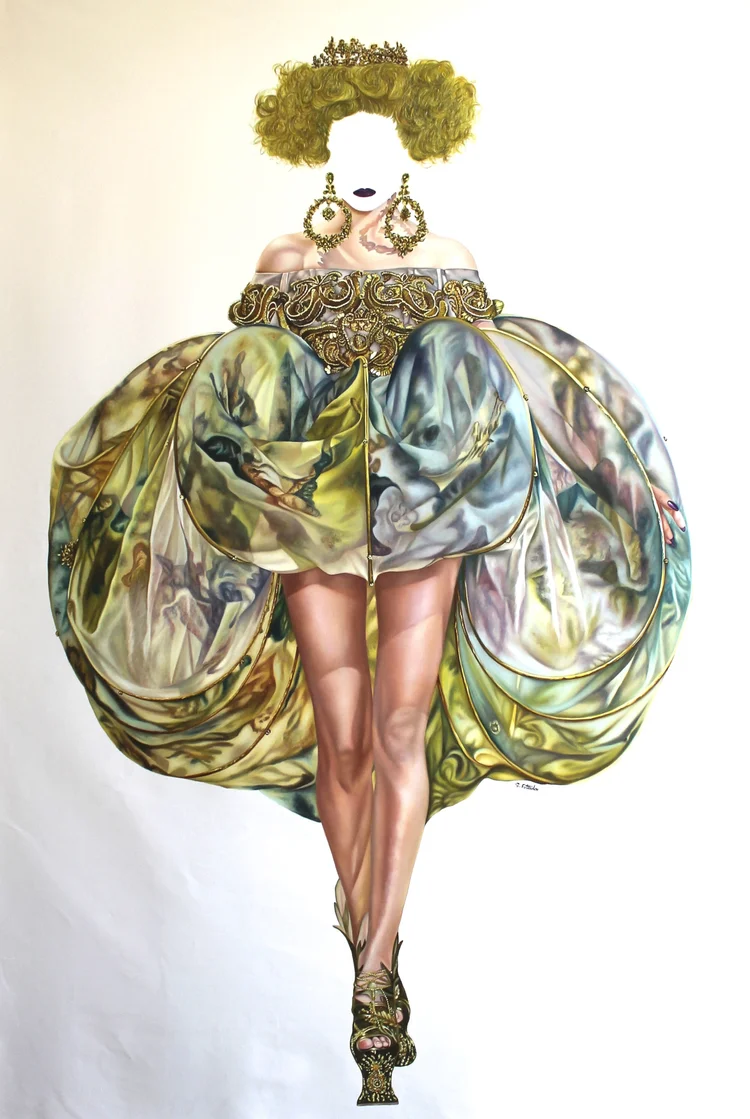
Instinct in Silk I
200x137cm, oil on canvas